
What Is SEO? A Complete Guide with the Best Free SEO Tools
Why SEO Is Important for Any Website
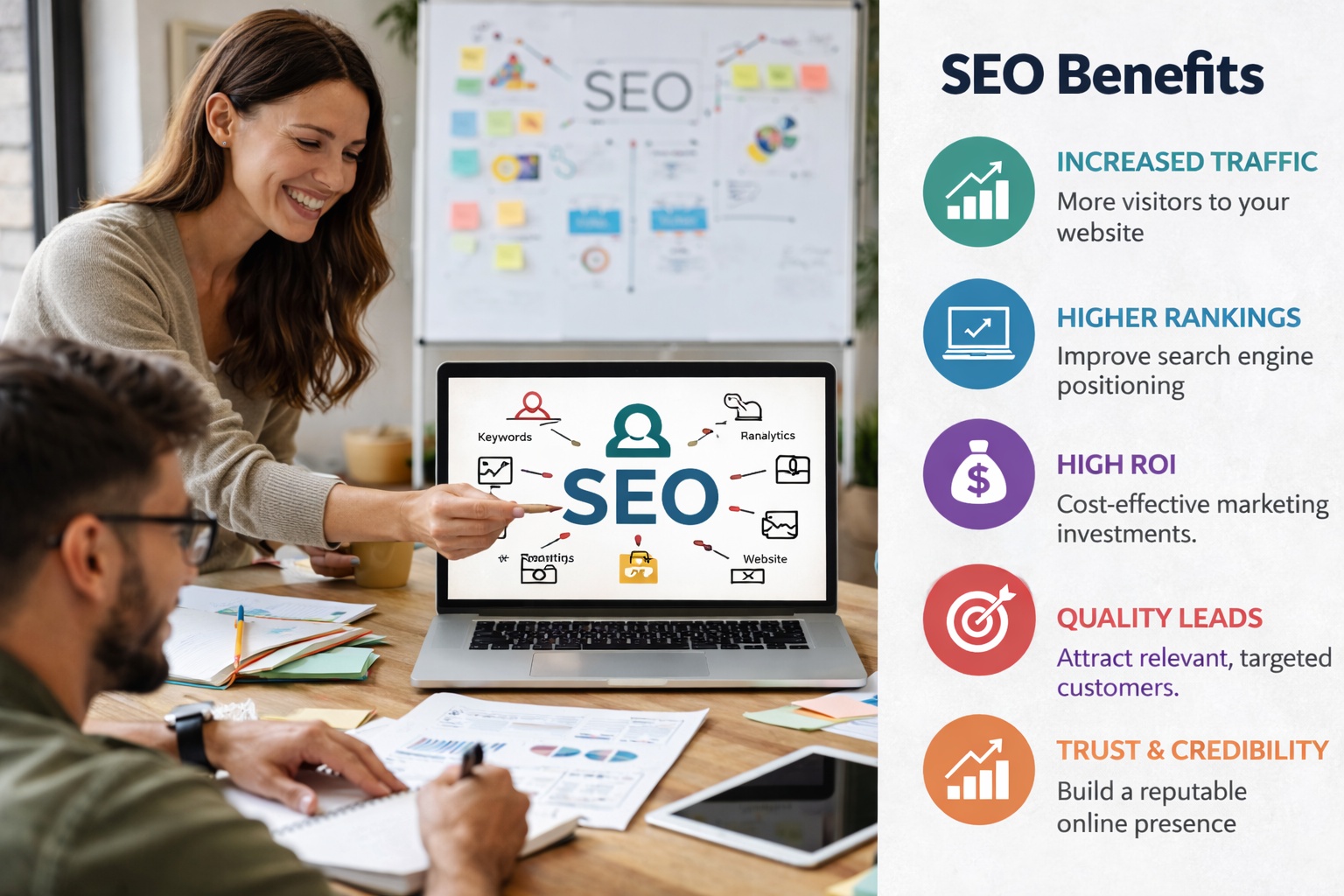
Knowing what is SEO is important because organic search delivers long-term and sustainable results. Unlike paid advertising, SEO continues to generate traffic even after the initial optimization work is completed. This makes SEO a cost-effective strategy for long-term online growth and also grow local businesses as well.
SEO helps build trust and credibility with users. Websites that appear organically in search results are often perceived as more reliable and authoritative. When users trust a website, they are more likely to engage, return, and convert.
Another major benefit of SEO is improved user experience. SEO encourages faster page loading, mobile-friendly design, and well-structured content. These improvements make websites easier to navigate and more useful for visitors.
SEO also increases website visibility by helping pages rank higher for relevant search queries. Higher visibility leads to more exposure and attracts high-quality traffic from users who are actively searching for specific information or solutions.
Over time, SEO supports long-term business growth by creating a stable and consistent flow of organic traffic. Search engines reward websites that demonstrate expertise, experience, authority, and trust, a concept commonly known as E-E-A
How SEO Works: The Core Pillars
To fully understand what is SEO, it is important to know how SEO works at a foundational level. SEO is built on three core components that work together to improve search rankings.
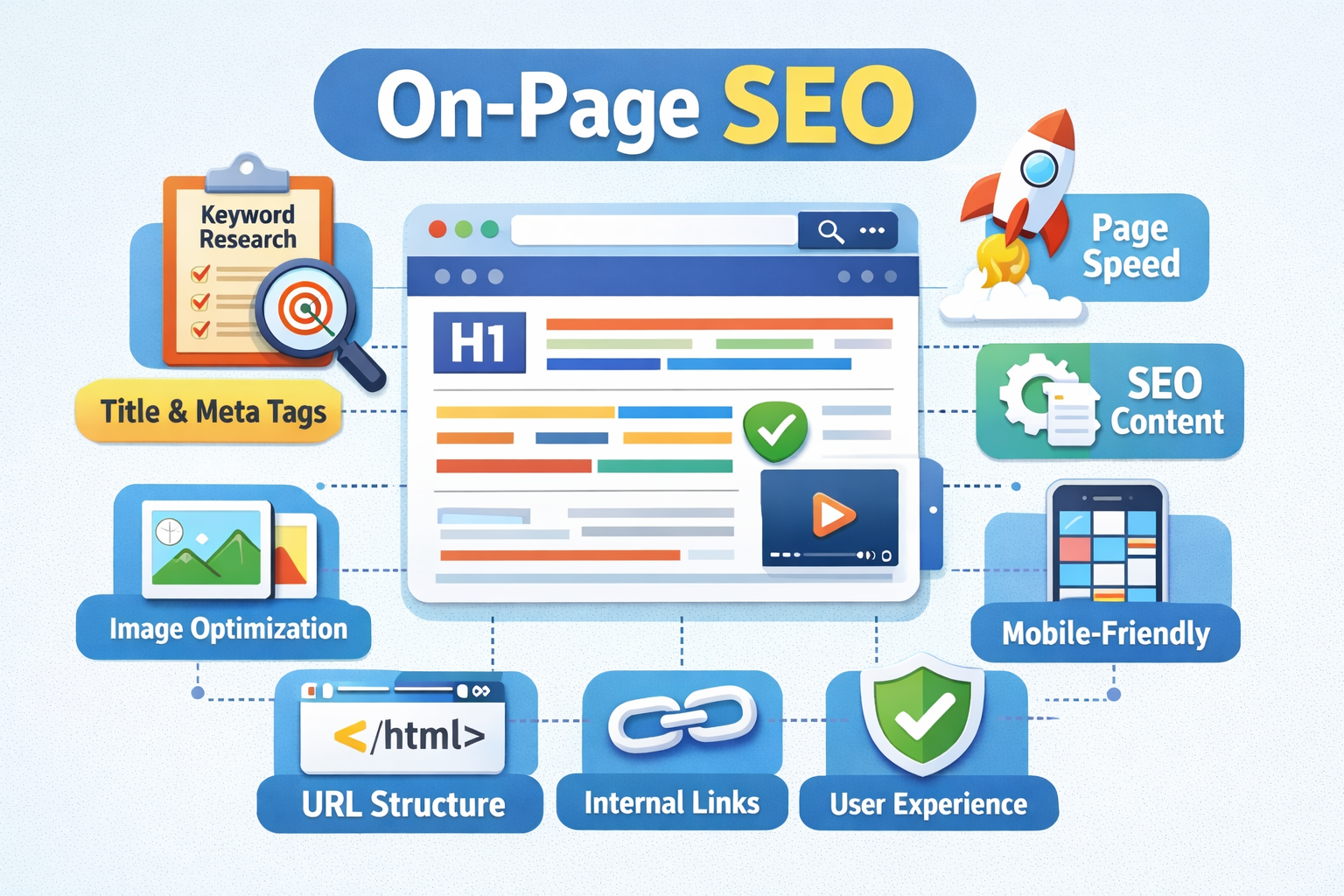
On-page SEO
On-page SEO focuses on optimizing individual web pages so that search engines can clearly understand the content. This includes proper keyword usage, SEO-friendly titles and meta descriptions, structured header tags, internal linking, and maintaining high content quality and readability.
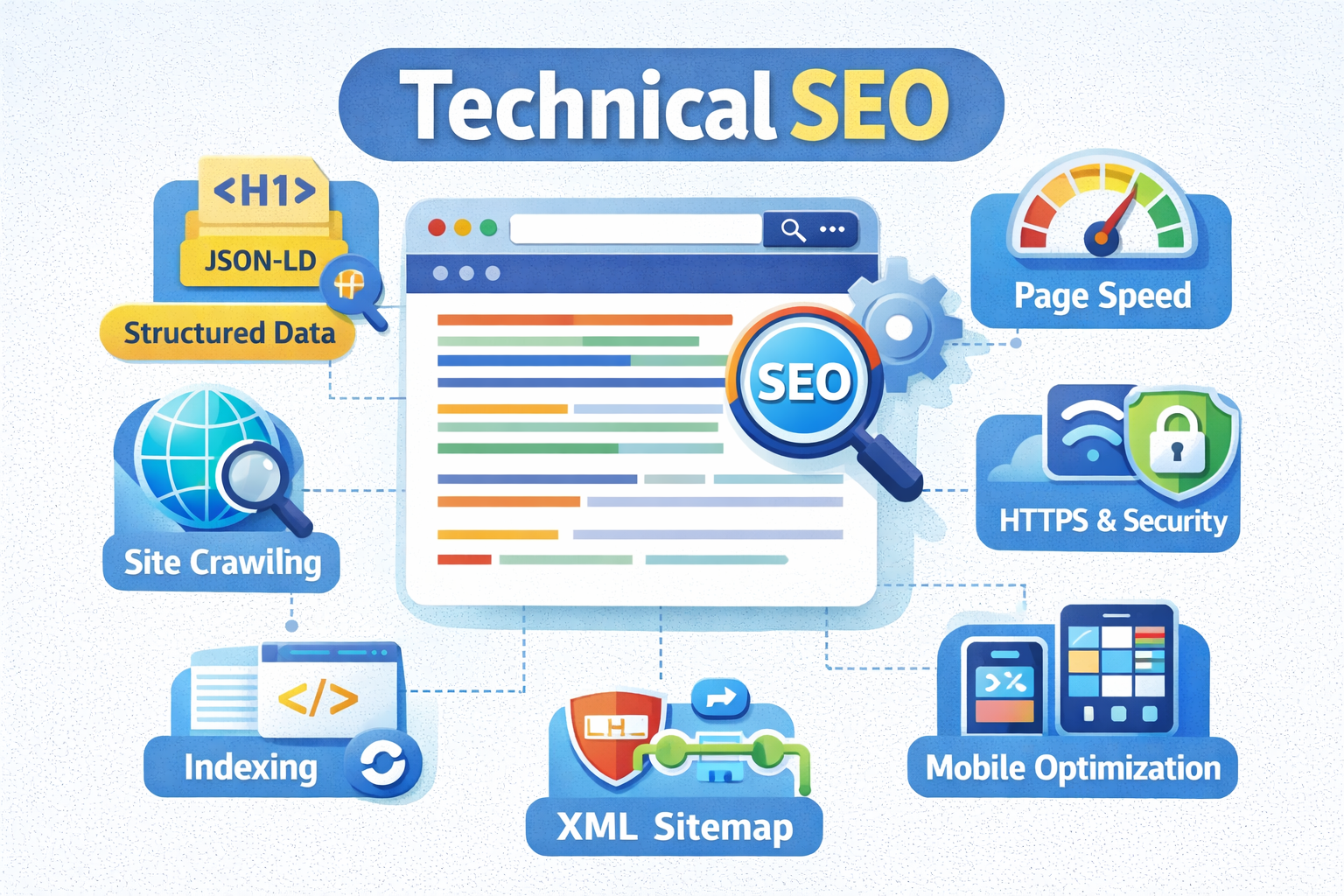
Technical SEO
Technical SEO ensures that a website is easy for search engines to crawl and index. It focuses on improving website speed, ensuring mobile responsiveness, implementing secure HTTPS, maintaining clean URL structures, and using XML sitemaps to guide search engines.
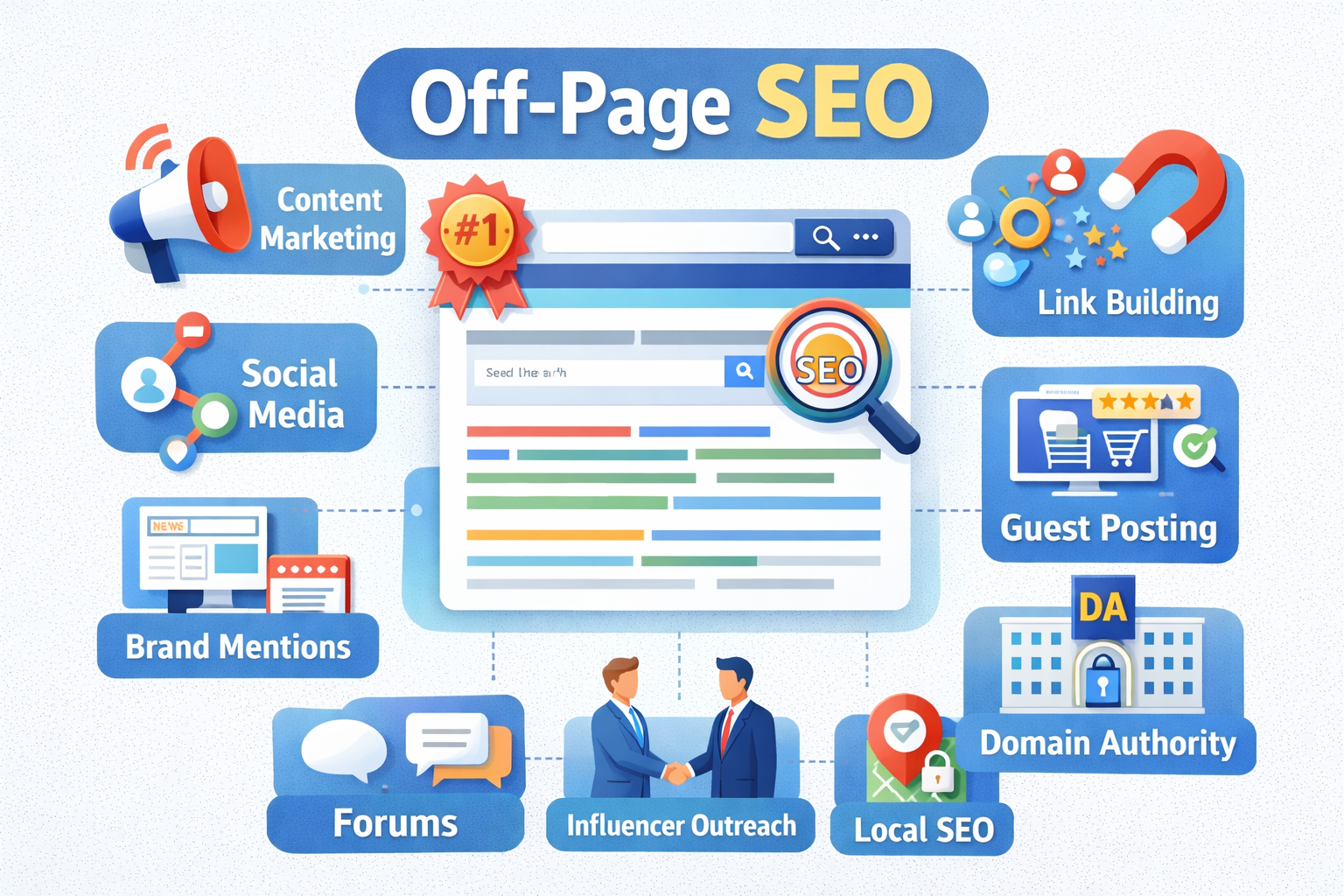
Off-page SEO
Off-page SEO helps build authority outside the website itself. It involves earning backlinks from trusted websites, gaining brand mentions, strengthening social signals, and managing online reputation. These external signals help search engines assess credibility and trustworthiness.
What Is SEO Keyword Research and Why It Matters
Keyword research is the foundation of SEO success. It helps identify what users are searching for and how competitive those search terms are. Understanding keyword behavior allows websites to create content that matches user intent.
When the right keywords are targeted with proper intent, search engines recognize the content as relevant and valuable. This increases the chances of ranking faster and achieving more sustainable results over time.
Best Free SEO Tools to Improve Rankings
Once you understand what is SEO, using the best free SEO tools can significantly improve optimization efforts. These tools help monitor performance, identify issues, and discover growth opportunities without additional cost.
Google Search Console
Google Search Console is an essential tool for tracking keyword rankings, fixing indexing problems, checking mobile usability, and improving overall page experience. It provides direct insights from Google about how a website performs in search results.
Google Analytics
Google Analytics helps analyze user behavior and traffic sources. It allows website owners to understand audience insights, track conversions, and measure overall SEO performance based on real user data.
Google Keyword Planner
Google Keyword Planner is a free keyword research tool that helps find keyword ideas, check search volume, and understand competition levels. Ubersuggest is ideal for beginners, offering keyword suggestions, basic SEO audits, and content ideas in its free version.
AnswerThePublic
AnswerThePublic is useful for content planning, as it reveals real questions users ask online. For WordPress users, Yoast SEO simplifies on-page optimization by improving meta tags, content readability, and XML sitemap generation.
How SEO Aligns with Google’s E-E-A-T Algorithm
Google prioritizes content created by people with real knowledge and experience. Sharing practical insights and real-world examples demonstrates experience, while accurate and in-depth content reflects expertise.
Authority is built by earning backlinks and mentions from trusted sources. Trust is strengthened through secure websites, clear authorship, and accurate information. Following E-E-A-T principles improves both credibility and long-term ranking potential.
SEO Best Practices for Faster Ranking
SEO is not instant, but consistent optimization delivers sustainable growth. Publishing high-quality and original content helps search engines recognize value and relevance.
Optimizing content for search intent rather than focusing only on keywords improves user engagement. Improving site speed and mobile usability enhances user experience and ranking potential. Strategic internal linking and regular content updates help maintain visibility and competitiveness.
Final Thoughts
Understanding what is SEO is the first step toward building a strong online presence. SEO is not just about achieving higher rankings; it is about creating meaningful and helpful experiences for users while meeting search engine standards.
By using the best free SEO tools, following E-E-A-T principles, and focusing on quality over shortcuts, businesses can achieve long-term success in search results. If organic growth that lasts is the goal, SEO is not optional—it is essential.